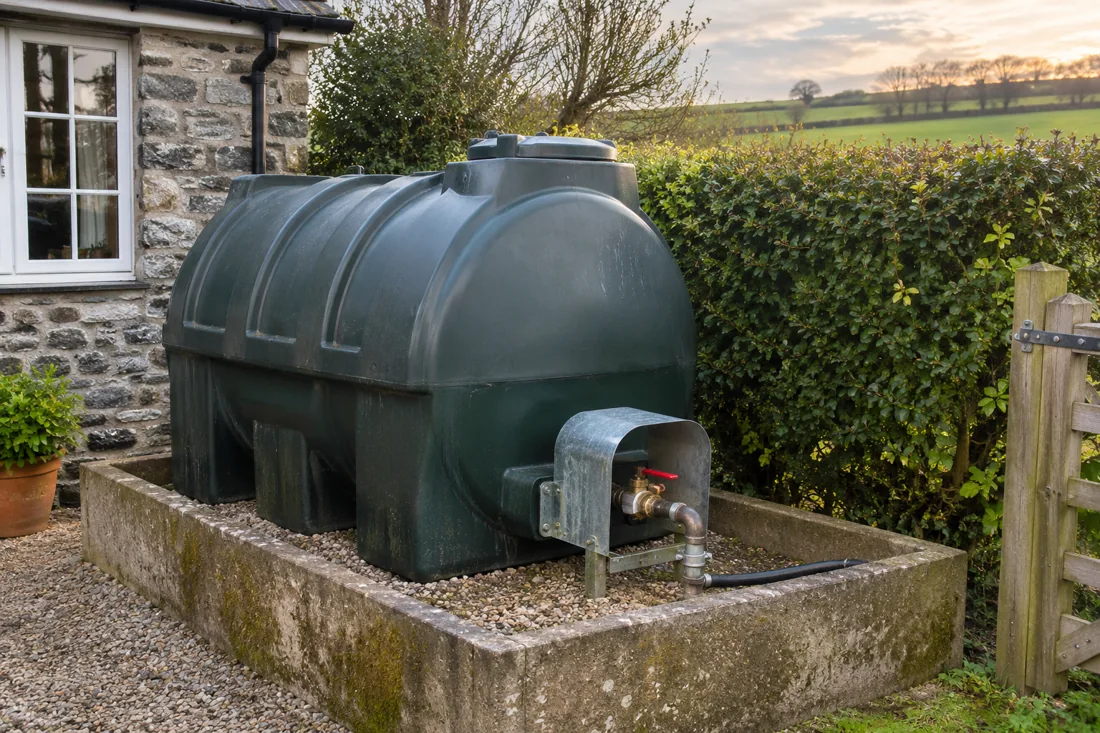
Take A Suspected Leak Seriously
A wet patch under a tank, oil inside the outer bund or a persistent smell can indicate a problem with the shell, fittings or supply line. An unexpected gauge change needs investigation too, though it does not establish a leak by itself. Keep people and pets away from affected areas and avoid contact with fuel.
Do not wash oil away or use detergent to disperse it. Do not attempt to patch a failing shell, transfer fuel into household containers or cut into a tank. If there is fire, a serious immediate danger or someone is unwell, use the appropriate emergency services.
Active Spill? This enquiry form is not an emergency response channel. Use the GOV.UK environmental incident reporting guidance where oil threatens land, drains or water. Contact your insurer and a specialist directly for urgent assistance.
Decide What Needs Attention First
| What You Have | What To Consider |
|---|---|
| Oil outside the tank or bund | Treat the escaped fuel and its route through the property as a priority. |
| Oil retained inside an outer bund | Arrange assessment of the source and containment. Do not drain the bund yourself. |
| Fuel loss without visible staining | Investigate the tank, buried or exposed pipework and gauge rather than assuming the cause. |
Replacing a tank may stop a source of leakage, but it does not recover fuel that has already escaped. A useful plan separates making the supply safe, dealing with remaining oil and investigating the affected ground. Some incidents need an environmental specialist as well as a tank contractor.
Record The Facts Without Disturbing The Site
Note when the issue was first noticed, what changed and whether a recent delivery took place. Keep delivery records, gauge readings and any existing photographs. Take new pictures only where you can do so safely, without walking through oil or moving a weakened tank.
Give the postcode, tank type and approximate amount of fuel left. Describe nearby drains, streams, wells or boreholes, and whether there is an oil smell inside a building. Say if the tank is still feeding an appliance and if the property is occupied, rented or used by the public.
Find The Source And The Extent
The source may be the tank body, a valve, a connection or a supply line. A visible drip is useful evidence but may not show the full extent of the release. Containment, pipe routes and surrounding surfaces should be assessed before the work is treated as a simple part replacement.
For a buried installation, investigation can be more involved because neither the shell nor escaped oil is readily visible. Historical losses and site records are especially useful. Soil or groundwater sampling may be needed to understand what has happened, rather than relying on a surface inspection alone.
Contact your insurer early and ask what it needs before works are commissioned. Policy terms vary, including cover for lost fuel, buildings and land. Keep a factual record of advice and agreed actions rather than assuming all pollution-related work will fall under the same claim.
Remaining Oil And Restoring The Supply
The remaining contents may need professional recovery to reduce further loss. Fuel condition and the proposed receiving storage determine whether oil can be retained. Contaminated liquids, absorbents and affected material need an appropriate waste assessment and handling route.
A failed plastic tank may require replacement, while some faults relate to fittings or pipework. The assessor should explain the diagnosed cause and the proposed remedy. Any temporary supply must be arranged as part of a safe plan, with an agreed interruption to heating or business equipment.
Costs And Records After An Incident
Costs can include fuel recovery, tank work, repairs, investigations, waste handling and reinstatement. Access and the amount and spread of escaped oil also matter. Ask for emergency containment work to be distinguished from follow-on replacement or remediation, so each stage has a defined scope.
Keep the findings, photographs, repair or replacement details and relevant waste records. If environmental investigation was needed, retain the reports and any follow-up instructions too. Confirm what has been completed, what remains uncertain and whether further monitoring is required before considering the incident closed.
For planned follow-up, our enquiry form can gather the background and help a suitable provider assess the request. Include any insurer reference and the work already undertaken, but leave out sensitive policy documents until a provider requests them through an appropriate channel.
Your Questions Answered
Does An Oil Smell Mean The Tank Has Failed?
An oil smell does not identify the cause on its own. It may relate to a delivery, a fitting, the supply pipe or damage to the container. A persistent smell or staining warrants prompt assessment, especially near a building, drain or water source. Do not wait for the tank to look empty.
Can I Use The Form For An Active Spill?
An active oil spill needs direct urgent assistance, and the enquiry form is not monitored as an emergency service. Follow official environmental incident guidance where pollution is threatened and contact your insurer or a suitable spill specialist. Use the form for planned follow-up once the immediate situation is being addressed.
Official help: report an environmental incident. See public guidance on oil spills at home for spill precautions.