When Replacement Makes Sense
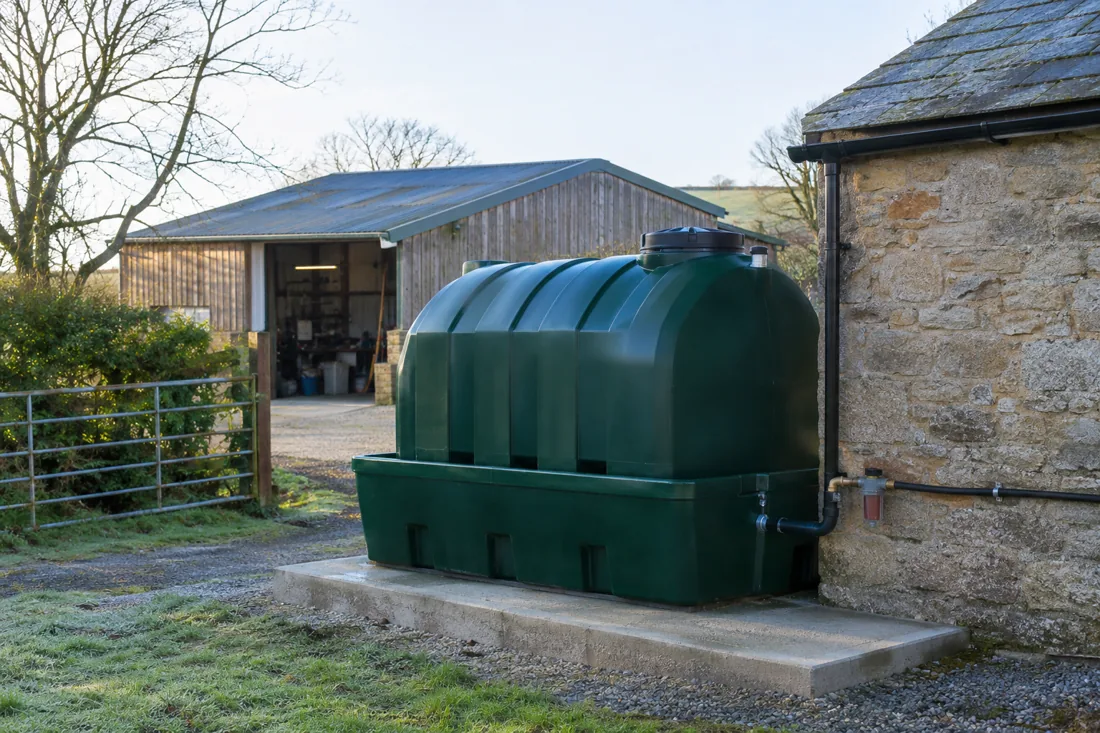
A cracked plastic shell, distorted sides, corroded steel or failing supports are reasons to have an oil tank assessed. Repeated problems do not always mean the same repair is needed. Cleaning may address contamination, but it cannot make an unsound container structurally sound.
Replacement also makes sense when the existing position no longer suits an extension or a revised garden layout. The new tank does not have to repeat the old arrangement. Use the change to review access for filling, inspection space and the route of the supply pipe.
| What You Have | What To Consider |
|---|---|
| Sound tank, dirty fuel | Investigate water entry and cleaning before deciding on replacement. |
| Damaged shell or unstable base | Arrange an assessment of both the container and its support. |
| Building work around the tank | Review the proposed position and protection before ordering a new tank. |
Choose Capacity And Shape Together
The best replacement is not necessarily the largest tank that fits. Fuel use, delivery habits and the available footprint should guide capacity. A slimline container may solve a width problem but still need a different base, and its delivery route must be checked against the actual product dimensions.
Plastic and steel have different maintenance considerations. A bunded tank has an outer containment layer around the fuel container, but this does not remove the need for correct siting and support. Ask for the proposed model, capacity, dimensions and warranty conditions in the written quotation.
Check The Position Before The Purchase
The survey should review nearby buildings, boundaries, drains and sources of water, alongside a suitable base. A position that once worked may be affected by newer buildings or altered drainage. Keep future extensions and screening in the discussion so the new tank can still be reached for maintenance.
New and replacement home oil tanks in England must meet Building Regulations. Agree the compliance route before work starts, using a registered competent person or the appropriate Building Control process. The installer should assess secondary containment and fire protection for the particular location, rather than treating every garden as the same.
Preserving Fuel And Managing Heat
Give an estimate of the oil remaining and mention any history of water, sludge or boiler filter blockage. Suitable oil can sometimes be stored temporarily and transferred into the replacement. Contaminated liquid and residue need a separate route, and fuel that appears clear from above may still have water below it.
The heating supply will be interrupted during disconnection and reconnection. If the base needs rebuilding or a new position prepared, discuss whether temporary storage and supply are practical. A temporary arrangement adds equipment and work, so ask for it to be priced rather than expecting uninterrupted heating as standard.
For a holiday let, school or business, describe occupancy and operating constraints at the first enquiry. The programme needs to allow for the people using the building. Avoid booking fuel deliveries or another contractor into the changeover window until the sequence has been agreed.
Photographs And Access Details
Send photographs of the tank, base and fittings, plus a wider view of its surroundings. Include the route from vehicle parking to the tank and the narrowest point along it. Tell us about steps, soft ground, gates that cannot open fully and overhead cables or branches.
Give your postcode, the reason for replacement and any information on the existing tank label. For a new position, show both locations. Old drawings, installation documents and pipework information help the assessor work out what can reasonably be retained and what needs closer investigation.
Compare The Whole Replacement Scope
A useful quotation separates the new tank, base work, removal of the old container, fuel handling and connection work. Ground preparation, changes to pipework and difficult access can materially change the cost. Check whether commissioning, waste handling and any temporary supply are included.
At completion, retain the tank instructions, warranty details, commissioning information and the relevant Building Regulations compliance record. Keep waste documentation where applicable to the old tank and contents. Ask how the gauge, fill point and containment should be checked, and which maintenance conditions apply to the warranty.
Your Questions Answered
Can The Existing Base Be Reused?
An existing oil tank base can be reused only if it is sound and suitable for the replacement model. A similar capacity does not prove that the support footprint is identical. The installer needs to assess its size, level and condition against the new tank requirements before confirming reuse.
Does A Replacement Need A Bund?
A replacement oil tank needs a site-specific assessment for secondary containment. Nearby drains, water and drinking water sources can affect that decision, alongside the tank capacity and filling arrangement. A bund is an outer barrier intended to retain a leak, and the installer should explain the proposed arrangement before you order.
Installation reference: GOV.UK guidance for home oil storage.