Remove, Replace Or Make Safe?
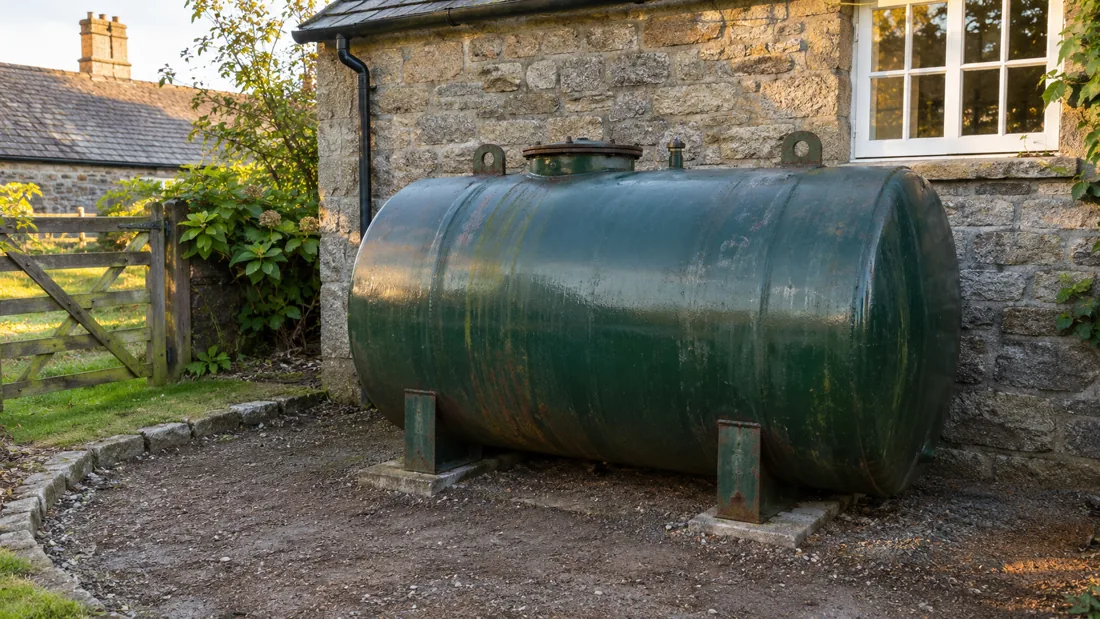
Oil tank removal suits a heating change, a failed container or a garden and building project that needs the space back. A tank that looks empty can still contain sludge, oily water and vapour. Taking the shell away is the last part of the work, after its contents and connections have been dealt with.
If you still need oil heating, consider replacement as one coordinated project. If there is no new tank, agree how any usable fuel will be handled before booking. A partly buried container needs an underground tank assessment, even when its fill point is above ground.
| What You Have | What To Consider |
|---|---|
| Heating system changing | Coordinate removal with the heating contractor so disconnection happens at the right stage. |
| Tank cracked or weeping | Treat the possible leak as a separate priority. Removal alone does not address affected soil. |
| Restricted route out | Allow for cleaning and controlled dismantling rather than assuming the tank can leave whole. |
What To Send For An Assessment
Start with the property postcode, tank material, approximate capacity and whether it is still connected. Explain why it is coming out and whether you need the base removed as well. If you have a building programme, give the required handover date rather than assuming removal and groundworks can happen together.
Useful photographs show the whole tank, its supports, pipe connections and the route to the road. Include the narrowest gate, steps, walls and any overhead obstruction. Photograph only from a safe position, and do not disturb a weak tank to get a better view.
The Oil Is Part Of The Job
Give a rough gauge reading or your best estimate of the oil remaining. Do not order a final fill when removal is already planned without discussing it first. More liquid means more pumping, holding capacity and transport, while a low level can still leave a substantial layer of residue at the bottom.
Usable oil may be transferred into a suitable receiving tank where that is agreed and its condition permits. Water and sludge are kept separate from recoverable fuel. A promise to recover every litre would be misleading, because contamination, the tank shape and the available destination all affect what can be kept.
How Removal Is Planned
The working sequence covers safe isolation, recovery of remaining liquid, removal of residue, cleaning and then lifting or dismantling. The contractor chooses the method after checking the tank and the working area. No householder should cut, drill or burn a redundant tank, and an empty gauge does not establish that it is safe.
A narrow Cornish garden entrance can affect the shell removal route without ruling out the job. Hose access and vehicle standing space also matter. Tell us about shared drives, soft lawns, steep changes in level and any need to protect paving, so these are considered before equipment is selected.
At a business, the plan also needs a named contact, isolation arrangements and any permit or access induction. A tank feeding essential equipment cannot simply be disconnected when the vehicle arrives. Agree the shutdown with the person responsible for the system.
Costs And The Finish You Need
Cost depends on size, material, contents, how easily the tank can be reached and whether it needs dismantling. Lifting equipment, difficult parking and separate visits for fuel recovery can add work. A photograph-based estimate may need a visit when the lifting route or the tank condition is uncertain.
Ask whether the quotation includes the base, redundant pipework, transport and the final surface finish. Removing a shell does not automatically include breaking out concrete, replacing a fence or laying new paving. If staining or an oil smell is uncovered, investigation and contaminated material handling need an agreed scope.
Keep A Useful Removal Record
Ask for a completion record identifying the tank and what was removed. Waste paperwork depends on the material, classification and movement, so it may include transfer or consignment documentation as applicable. A gas-free record is relevant to particular testing and work methods, rather than a universal certificate for every collection.
Retain the quotation, invoice and any disposal or waste records with the property file. At handover, check what remains in place and whether any follow-up is needed. This matters when builders arrive later or a buyer asks what happened to the former oil installation.
Your Questions Answered
Can A Tank Be Removed With Oil Still Inside?
Oil tank removal can be planned while fuel remains in the tank. The liquid must be dealt with before the shell is lifted or dismantled. Tell us the approximate amount and whether you want suitable fuel retained, because storage, transfer and waste handling need to be included in the quotation.
Will The Base Be Taken Away Too?
Oil tank base removal is a separate part of the scope and should be agreed in writing. Some customers want to retain a sound base for another use, while others need the space cleared for landscaping. Ask about buried pipework, rubble removal and the surface finish rather than assuming these are included.
Safety reference: HSE guidance on work on tanks and drums.