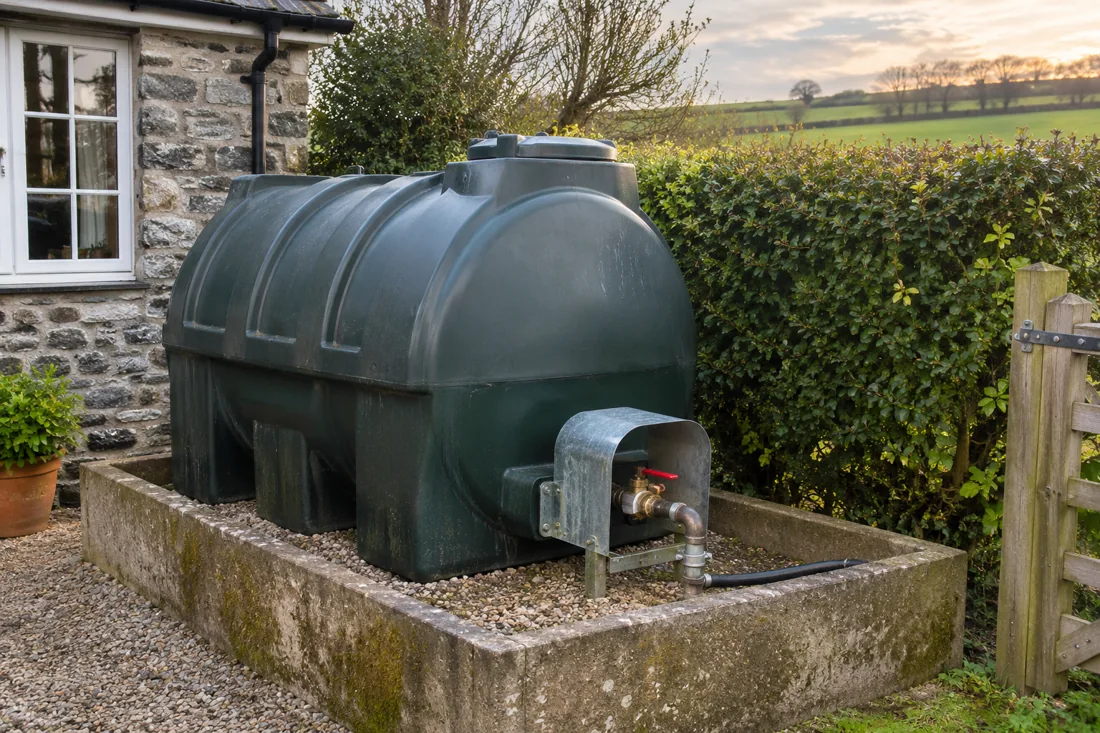
Start With The Intended Use
For a home, explain whether the tank will serve a boiler, range cooker or another appliance. An installer needs to understand the likely fuel demand and the proposed pipe route before recommending storage. For a commercial property, identify the equipment served and whether interruption would affect occupants or essential operations.
A new installation needs a defined scope even when no old tank is coming out. The tank, support, fill and vent arrangements, supply line and commissioning need to work as one system. If you are also replacing the heating appliance, agree who takes responsibility for the interface between the two jobs.
| What You Have | What To Consider |
|---|---|
| New home heating supply | Coordinate tank design with the heating installer before finalising the base. |
| Existing tank to be moved or renewed | Use the replacement guide to include old fuel and removal. |
| Generator or business fuel store | Provide fuel demand, autonomy needs and the site operating restrictions. |
Give The Position Room To Work
A convenient patch of ground is only a starting point. The proposed location needs an assessment of fire protection, pollution risk, access and support. Show nearby buildings, boundaries, drainage and any water source, as well as the route a delivery driver will use to reach the fill point.
Think beyond installation day. The tank should be accessible for inspection and maintenance, with a filling arrangement that can be used safely. Avoid finalising sheds, planting or screening until the installer has explained what space must remain available around the equipment.
For a listed property, discuss any alterations to protected fabric or setting with the relevant authority before work is fixed. Cornwall Council identifies a substantial stock of listed buildings across the county. A new tank position should be considered alongside other property consents, rather than assumed to fall within a heating quotation.
Base And Pipework Planning
The base must suit the chosen tank and support its loaded weight. Product dimensions, support requirements and the condition of the ground matter more than the outline of a previous slab. Ground preparation and curing time can affect the programme, particularly if installation and landscaping are happening together.
The supply route should be reviewed for protection, accessibility and connection to the appliance. Tell the assessor about planned paving or building work before pipes are installed. Hidden connections and routes that become inaccessible later can make maintenance harder, so keep a record of the agreed layout.
Domestic And Commercial Requirements
For new domestic oil storage in England, Building Regulations apply. GOV.UK explains the competent person and Building Control routes. Agree which route will be used and which compliance documentation will follow, alongside any tank warranty or commissioning record.
Commercial and public-sector storage needs assessment under the rules relevant to its use. Farm fuel storage can follow a different route depending on whether it serves agricultural operations, the farmhouse or another business activity. State the actual use of the fuel so the assessor can identify the correct requirements.
The assessment also needs to consider containment, collision risks and any workplace controls appropriate to the fuel. Do not specify a tank solely by copying a neighbouring installation. The substance stored and the location can change what protection is required.
Information For A Useful Quotation
Send a postcode and photographs of the proposed tank position from more than one angle. Include the vehicle approach, gates, steps and the intended connection point. If the installation forms part of a build, provide a simple layout showing other work and the stage the project has reached.
State your expected fuel use if known, the equipment served and who can approve the design. Tell us if there is already oil on site that you hope to transfer. New storage does not make old or contaminated fuel suitable for use, so any transfer needs its own assessment.
Cost, First Fill And Handover
Cost drivers include capacity, material, containment, base construction and the length and complexity of the supply route. Ground conditions, protective measures and lifting access can add work. Ask whether the quote includes testing and commissioning, and who will arrange the first delivery.
Do not book a first fill until the installation is ready and the installer has confirmed the filling arrangements. Keep the model details, warranty, instructions, compliance information and an installation layout. At handover, ask how to read the gauge, recognise a problem and arrange future inspection without obstructing access.
Your Questions Answered
Can I Choose The Tank Before The Survey?
Choosing an oil tank before a survey can narrow your options too early. A preferred capacity or shape is useful information, but the base, access and location need checking first. Ask the installer to confirm the actual product and support requirements before buying equipment or arranging any permanent groundworks.
Who Arranges Building Control?
Building Regulations compliance for a home oil tank should be agreed before installation. A contractor registered with a suitable competent person scheme can self-certify relevant work. If that route is not used, discuss the necessary local Building Control process and fees so the required approval is part of the programme.
Further guidance: home oil storage, business oil storage and Cornwall listed building guidance.